
HVAC Repair & Installation
Diagnosis before parts, sizing before equipment. We measure what the system is actually doing, tell you what it needs, and put the numbers on paper so you are not buying a guess.
Most failures are not the part that gets replaced
A system that cannot cool is often not a broken air conditioner. It is a filter collapsed into the return, a coil packed with dust, a condensate switch doing its job, a duct system leaking a third of its air into the attic, or a unit that was two sizes too large the day it was installed and has short-cycled ever since. Replacing a component without measuring the system is how the same complaint returns in August.
So our service calls start with readings, not with a parts van. Temperature split across the coil, static pressure, airflow, refrigerant behaviour, electrical draw, capacitor condition, drain function, thermostat control and safety switches — measured, written down, and shown to you. Then a diagnosis in plain language, and options with prices attached.
For installations, the equivalent discipline is sizing. Equipment should be selected against a load calculation for the actual house — its insulation, windows, orientation and air tightness — not against the tonnage of the unit being removed. Oversized systems cool the air quickly, shut off before they dehumidify, and cycle themselves to an early grave. Right-sized systems run longer, quieter and drier.
What the service includes
- Measured diagnostics before any repair — static pressure, temperature split, airflow, refrigerant behaviour, amp draw, capacitor and contactor condition, safeties and controls.
- Written diagnosis with options: repair, and where relevant the honest comparison against replacement, with both prices in front of you.
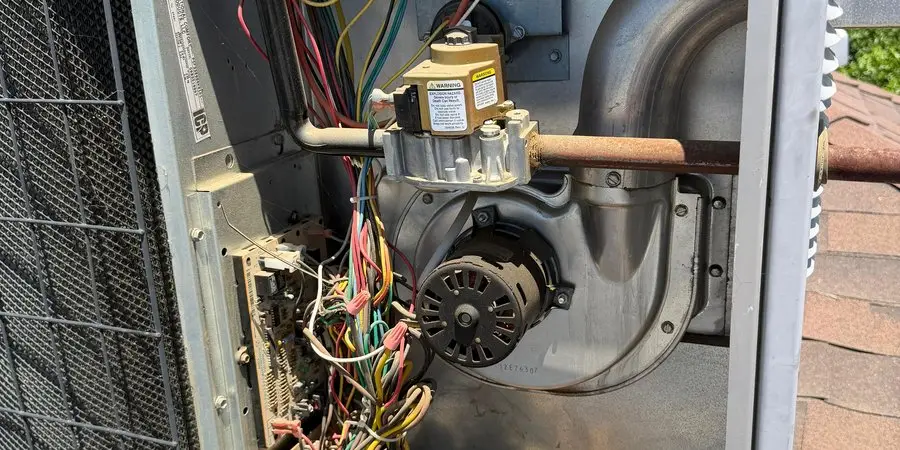
- Common repairs — capacitors, contactors, blower motors and modules, condensate pumps and switches, control boards, thermostats, ignitors, flame sensors and limit switches.
- Refrigerant leak diagnosis — located and repaired rather than topped up and forgotten, handled under EPA Section 608 requirements.
- Coil cleaning, evaporator and condenser, and drain pan and line clearing with a working safety switch verified.
- Preventive maintenance visits — inspection, cleaning, tightening, calibration and a written condition report each time.
- Replacement sized to a load calculation, not to the label on the old equipment.
- Installation done completely: proper line sets, correct charge by weight and verified by measurement, condensate handled, plenums and transitions sealed with mastic, electrical to code.
- Airflow balanced and measured at the registers, with the readings recorded on your report.
- Documentation package — model and serial numbers, readings, warranty registration details and photographs of the completed work.
Repair, replace, or fix the ducts first
These three are decided by numbers, not by feel. A ten-year-old system with a failed capacitor and clean coils is a repair, full stop. A twenty-year-old unit with a compressor drawing high amps, a leaking coil and an obsolete refrigerant is a replacement, and stretching it another season usually costs more than it saves. And a system that measures fine at the equipment but cannot satisfy the house is very often a duct problem — leakage, undersized returns, crushed runs — where new equipment would be an expensive way to keep the same complaint.
We would rather have that conversation openly, with the readings in front of you, than sell a system that will not solve the problem. That is why we quote duct sealing and insulation alongside equipment when the measurements point there, and why we are happy to be the second opinion when a replacement quote does not feel right.
Maintenance sits underneath all of it. Filters at appropriate intervals, coils kept clean, drains clear, refrigerant charge correct and airflow within specification is what keeps a system at its rated efficiency and gets it to the end of its design life instead of half way.
Signs you need this service
- The system runs but the house never reaches the thermostat setting
- Warm air from the vents in cooling, or cool air in heating
- Short cycling — the unit starts and stops repeatedly within a few minutes
- Ice on the refrigerant line or the indoor coil
- Water around the air handler, or a system that shuts down when the drain backs up
- New noises: grinding, screeching, buzzing at start-up, or a hard clunk when it cycles
- A breaker that trips when the system starts, or lights dimming on start-up
- Rising bills with unchanged habits, or a unit approaching 15–20 years of age
- Rooms that have never been comfortable regardless of the thermostat
Measure, explain, then work.
No diagnosis by guesswork, no equipment sized by habit, and nothing installed before you have the numbers and the price in writing.
Measure
We take the full set of readings on the equipment and the air side, inspect the coil, drain, electrical components and controls, and photograph what matters. Nothing is replaced on suspicion.
Explain
You get the diagnosis in plain language with the readings attached, and where it is a genuine decision, repair and replacement are priced side by side — including whether ductwork is the real culprit.
Repair or install
Repairs are completed with correct parts and the system re-tested against the original readings. Installations are sized to a load calculation, sealed, charged by measurement and wired to code.
Verify and document
Airflow is balanced and measured at the registers, the system is run through a full cycle, and you receive readings, photographs, model and serial numbers and the written guarantee.
HVAC Repair & Installation: common questions
Straight answers, no pressure. Call us if yours is not here.
Age, the cost of the specific repair, the refrigerant it uses and its measured performance decide it. As a rough frame: a unit under twelve years old with a modest repair is worth fixing; a unit past fifteen with a failing compressor or a leaking coil on obsolete refrigerant usually is not. We will show you the readings and both prices and let you choose without pressure.
That is very often duct-side, not equipment-side — leakage into the attic, a return that is too small to feed the blower, or crushed runs. Occasionally it is sizing. Either way it is measurable, and measuring it is the first thing we would do rather than proposing more equipment.
Once a year at minimum, and twice for systems that both heat and cool hard — one visit before cooling season and one before heating. Filters need attention far more often than that, typically every one to three months depending on the filter and the household.
Gladly, and we do it often. Bring us the quote and we will measure the system ourselves and tell you whether it is justified — including when the honest answer is that the other quote is fine.