
Chimney Cleaning
Inspected first, then swept — flue, smoke chamber, damper and firebox brought back to bare surface with containment at the hearth, and everything we find photographed and explained.
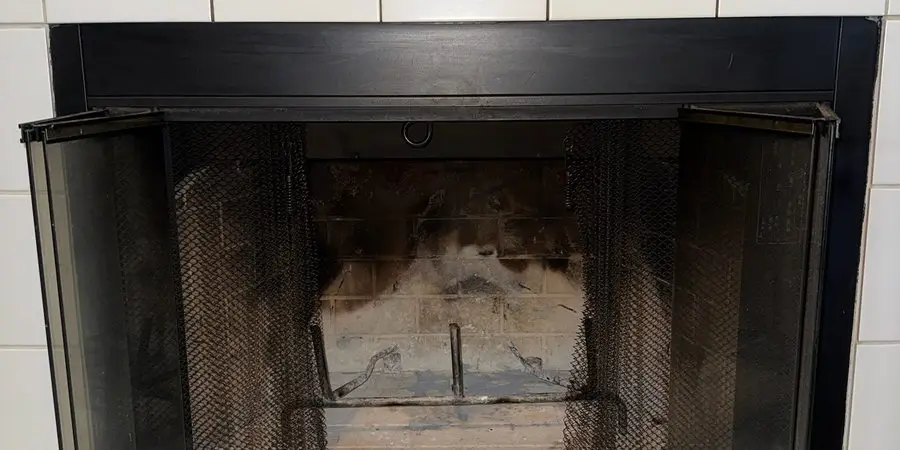
Sweeping is a safety service, not housekeeping
Every fire leaves something behind. Wood smoke condenses on the cool inner walls of a flue as creosote — first as a light soot, then as a flaky black crust, and finally as a hard, tarry glaze that is both difficult to remove and highly combustible. Soot narrows the flue, obstructions trap it, and a chimney that cannot draft properly begins pushing combustion products back toward the room instead of out of the house.
That is why the work begins with looking. We inspect the firebox, damper, smoke chamber and the accessible length of the flue with light and camera before a single brush goes in, because the point is not simply to remove the deposit but to know why it formed and whether the structure around it is sound.
National Fire Protection Association guidance in NFPA 211 is to have chimneys, fireplaces and vents inspected at least once a year, and to clean and repair as the inspection dictates. Industry practice is to sweep once deposits reach roughly an eighth of an inch. We work to the same logic: inspect annually, sweep on condition, and never manufacture a reason.
What the service includes
- Inspection before sweeping — firebox, damper, smoke shelf and chamber, and the accessible flue, with photographs of anything of concern.
- Containment at the hearth: the opening is sealed and held under vacuum so soot stays in the fireplace and not on your rug.
- Flue swept with brushes and rods sized to the flue material and dimensions — clay tile, metal liner or unlined masonry.
- Smoke chamber and smoke shelf cleaned, which is where creosote and debris most often accumulate unnoticed.
- Firebox and damper cleaned and function-checked, with the damper freed and adjusted where it has seized.
- Cap, crown and top-of-flue checked from the roof or by camera for blockage, nesting, missing cap or visible cracking.
- Obstruction removal — nesting material, leaves, debris, and animal entry evidence documented and reported.
- Photographic report of the condition of the flue and any recommended repairs, delivered in writing the same day.
Two risks, one visit
The first risk is fire. Creosote is fuel sitting inside a heat-conducting shaft that runs through the framing of your house. A chimney fire can be dramatic and obvious, or it can be a fast, quiet event that leaves cracked tiles and a compromised flue behind without anyone in the living room realising what happened. Removing the fuel is the direct control.
The second risk is what you breathe. A restricted or blocked flue does not stop the fire; it changes where the combustion products go. Carbon monoxide is colourless and odourless, and a flue that cannot draft properly — because of soot narrowing, a collapsed liner, a bird nest above the damper or a missing cap — is the most common reason it enters a room instead of leaving the roof. This is also why we check draft and cap condition, not only the amount of soot we can remove.
A clean, sound chimney also simply works better: the fireplace lights easily, holds a fire without smoking back into the room, and burns less wood for the same heat.
Signs you need this service
- You have burned through a season and have no record of a sweep or inspection
- Smoke pushing back into the room when you light a fire, or a fire that is hard to start
- A strong campfire or tar smell from the fireplace, especially in humid weather
- Black, flaky or shiny tar-like buildup visible in the firebox or on the damper
- Birds, squirrels, scratching sounds, or nesting material dropping into the firebox
- A damper that will not open or close, or a fireplace that has been unused for years
- You have bought a home and do not know the chimney history, or you are about to sell one
Inspect, contain, sweep, verify.
The order matters: we find out what is actually happening in the chimney before we start removing the evidence.
Inspect
Firebox, damper, smoke chamber and accessible flue are examined with light and camera. Cap and crown are checked. Anything structural is photographed and quoted separately — never mixed into the sweep without telling you.
Contain
Floors and furnishings are covered and the fireplace opening is sealed and placed under vacuum before brushing starts, so soot leaves through our equipment rather than into your living room.
Sweep
Flue, smoke chamber, smoke shelf and firebox are brushed and vacuumed with tooling matched to the flue material, and obstructions or nesting are removed and shown to you.
Verify and report
Draft is checked, the damper is operated, the hearth is cleaned down, and your written report with photographs and any repair recommendations is sent the same day.
Chimney Cleaning: common questions
Straight answers, no pressure. Call us if yours is not here.
Inspection is annual; sweeping depends on use. A fireplace burned most winter evenings often needs sweeping every year, while a few decorative fires a season may need it every two or three. The deciding factor is deposit thickness — around an eighth of an inch is the point at which it should come out.
That is the part we design around. The opening is sealed and held under negative pressure with a vacuum for the entire sweep, floors and furniture are covered, and the hearth is cleaned down before we leave. A properly done sweep is remarkably undramatic.
Yes, though for different reasons. Gas appliances produce far less creosote, but their vents still block with nesting, debris and deterioration, and gas burns produce moisture and acidic condensate that damages liners. An annual look at the venting is still the right practice.
We photograph it, explain what it means in plain language and quote the repair separately so you can compare it, get another opinion, or schedule it later. A sweep is never used as a lever to sell masonry work.