
Air Duct Replacement
When ductwork is past saving, patching it again is the expensive choice. We remove it, size the new system for the house it actually serves, and build it to be sealed, insulated and quiet for decades.
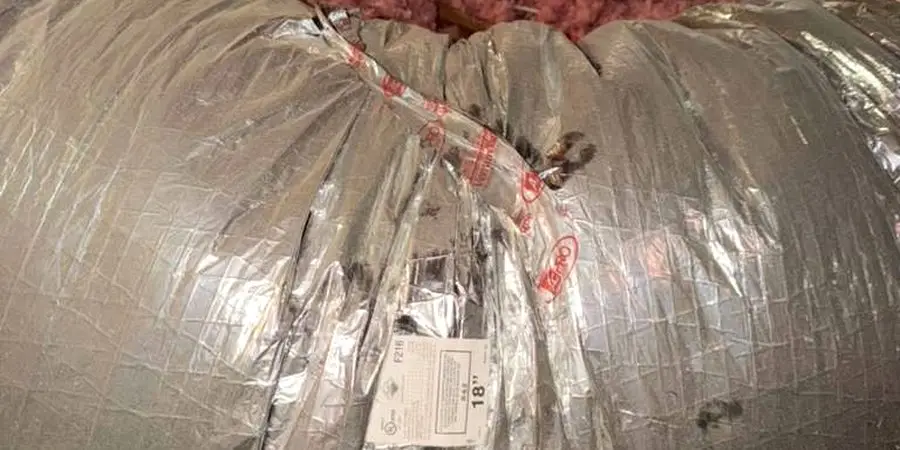
A new system, not a new-looking one
Some ductwork cannot be rescued. Liner that has begun to shed, duct board that has absorbed water, flex that has been crushed and re-crushed by decades of attic traffic, or a system that was undersized the day it was installed — these are not sealing problems. They are the reason a house has never been comfortable, and no amount of mastic changes them.
Replacement is also the moment to correct design mistakes rather than reproduce them. Before anything is ordered we look at the equipment capacity, the room-by-room loads, the return path and the physical routing available. Runs are sized so each room gets the air it needs, the return is large enough to actually feed the blower, and bends are kept generous instead of stacked one after another to save a metre of material.
The result should be invisible. You should not hear it, you should not feel one room fighting another, and you should not think about it again for a very long time.
What the service includes
- Load and airflow review before design — equipment capacity, room-by-room requirements, return sizing and the routes actually available in your attic or crawlspace.
- Removal and disposal of the old system, bagged and carried out rather than left in the attic.
- New insulated duct — typically R-6 or R-8 depending on where the run lives and your climate zone.
- Correctly sized trunk, takeoffs and returns, with generous radius bends instead of stacked elbows that strangle airflow.
- Every connection mastic-sealed and mechanically fastened, plenums rebuilt or resealed as needed.
- Proper support and strapping at code spacing so nothing sags, kinks or rests on framing.
- New boots, registers and grilles sealed to the building surface.
- Airflow balanced and verified at every register, with the readings recorded on your report.
- Photographic documentation of the finished installation, run by run, and the guarantee in writing.
Why replacement is sometimes the cheaper decision
A duct system that leaks a third of its air, cannot deliver to two bedrooms and has already been patched three times is costing money every month while delivering less comfort every year. Replacement puts an end to the recurring bill, and it lets the equipment you already own run the way it was designed to: shorter cycles, better dehumidification in summer, quieter operation, and even temperatures instead of a hot upstairs and a cold back room.
It also resets the clock on the part of the system nobody sees. Properly installed insulated duct with sealed connections is a long-lived assembly — the failures we are usually called to fix are the result of poor original workmanship, water intrusion or physical damage, not age alone. Building it right the first time is what makes the next twenty years uneventful.
If a partial replacement will do the job — the deteriorated branches replaced, sound trunk lines kept and sealed — we will quote that instead. We would rather do the smaller job well than sell the larger one.
Signs you need this service
- Ductwork older than roughly two decades that has never been documented or serviced
- Interior liner visibly deteriorating, shedding fibres, or duct board that has been wet
- Repeated repairs to the same system, or patches on top of patches
- Rooms that have never been comfortable since the day you moved in
- Mould growth inside ducts that cannot be removed from a porous surface
- Rodent infestation with nesting and contamination inside the runs
- A remodel, addition or new equipment that the existing duct sizing was never designed for
Design, remove, rebuild, balance.
A replacement is a small construction project — so it gets a plan, a schedule and a written scope before anyone opens a ceiling.
Design
We measure the house, review equipment capacity and room requirements, plan routing and sizing, and present a scope that lists materials, R-values, register counts and the schedule. Nothing is ordered until you approve it.
Protect and remove
Work areas and pathways are protected, the old system is cut out, bagged and removed from the property. Anything we uncover — water damage, missing insulation, unsafe wiring — is photographed and reported before we cover it up.
Install and seal
New insulated runs are installed on the planned routes, connections are mastic-sealed and fastened, plenums are rebuilt where required, and everything is supported at correct spacing so it stays that way.
Balance and hand over
Airflow is measured and balanced at every register, the system is run through a full cycle, and you receive photographs, readings and the written guarantee for the installed work.
Air Duct Replacement: common questions
Straight answers, no pressure. Call us if yours is not here.
Most single-system homes are back in operation the same evening, and a straightforward replacement is usually complete in one to three days depending on the number of runs and how accessible the attic or crawlspace is. Your written scope includes the schedule, and we tell you in advance if a stage requires the system to be off.
Not necessarily. If your furnace or air handler is healthy and correctly sized, new ductwork will simply let it do its job properly. If it is at the end of its life, doing both at once avoids paying twice for access — and we will say so plainly rather than bundling it in quietly.
Both are legitimate when installed correctly. Insulated flex is quiet, fast to route and well suited to attic runs when it is supported and not compressed; sheet metal is the right answer for trunks, tight geometry and long straight runs. We specify per situation and explain the choice on your quote.
Yes, and it happens often. If the trunk is sound and only branches have failed, we quote the partial scope. You will always be able to see both options side by side.